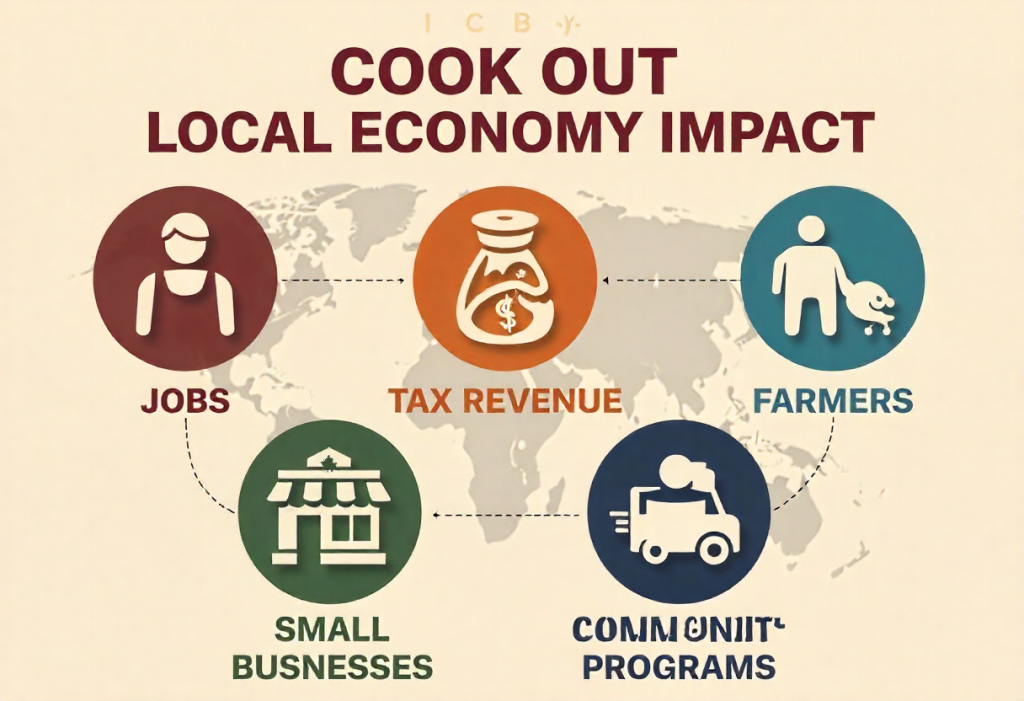
The story of Cook Out local economy influence goes deeper than food. Every new location brings Cook Out economic benefits like jobs, taxes, and community programs. It also sparks challenges for small restaurants. Let’s break it down.
The Rise of Cook Out in Local Communities
Cook Out started as a single drive-thru in North Carolina (discover the full story in How a Regional Chain Became a Cultural Staple.) Over time, it turned into one of the strongest examples of regional fast-food economic impact. Its model is simple—big portions, low prices, and a menu stacked with choices—but its influence runs deeper.
From a regional chain to a community staple, Cook Out became more than a place to eat. In many towns, it feels like part of the culture. Students gather there after football games. Families stop for quick dinners on busy nights. People connect with Cook Out because it feels both affordable and familiar, something they can count on week after week. That’s why Cook Out regional influence stretches beyond food sales—it becomes part of daily life.

Cook Out’s Role in Job Creation
One of the most obvious Cook Out economic benefits is job creation. Explore more here. For every new shop, between 30 and 50 people are usually employed. To see how Cook Out channels community spirit into opportunity, check our Community Involvement article.
For towns with shrinking manufacturing or retail opportunities, a new Cook Out can serve as a rare employer that injects energy into the labor market. This is franchise-driven job creation at work, giving communities more than just fast food—it gives them opportunities for income and growth.
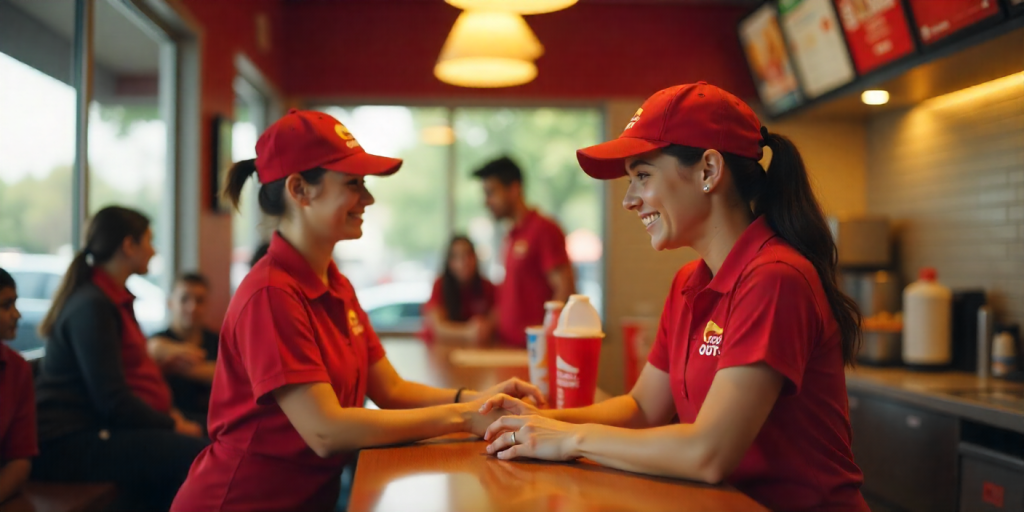
Employment opportunities for students and part-time workers
The real backbone of Cook Out jobs in local towns is young workers. Students rely on part-time shifts to cover bills, books, or gas money. Many balance shifts by scheduling clients around school or adjusting hours around class schedules. Cook Out makes this work because its shifts are flexible and its Cook Out hiring practices are straightforward.
Many former employees say that working at Cook Out helped them develop critical abilities including customer service, time management, and collaboration. What starts out as merely a job frequently develops into worthwhile experience that aids in future professional endeavors. Due of their flexible hours, teens, college students, and part-time workers frequently choose these occupations.
How Cook Out Supports Local Suppliers
Cook Out stands out because of how it sources food. Cook Out frequently collaborates with local farmers and ranchers, in contrast to certain fast-food goliaths that import products from distant vendors. . This Cook Out supporting local farmers approach keeps money inside the community instead of sending it out of state. The USDA highlights the positive economic impact of sourcing from regional farms.
It also means that when you buy a burger, part of that money might go directly to a farmer you’ve seen at the local market. This Cook Out supply chain sourcing method gives local producers a consistent stream of income. In rural areas, that stability can mean the difference between a farm surviving or shutting down.
Sourcing produce, meat, and goods from nearby businesses
A good example comes from Georgia, where Cook Out bought beef from regional ranchers during a period when cattle prices dipped. That partnership gave ranchers steady contracts at a time when many struggled. Similar stories appear across other states, where Cook Out contracts help stabilize dairy farms and produce growers. This strategy makes Cook Out part of the local economic development from franchises, not just a national brand.

Cook Out’s Effect on Small Business Competition
Every large chain affects its surroundings. Cook Out is no exception. When a new location opens, local diners and family-owned restaurants often feel the hit. That’s why Cook Out small business competition sparks debate among business owners.
Some argue Cook Out draws customers away with its pricing and speed. Others say it raises the bar and forces smaller shops to rethink their menus or customer service. Either way, the presence of a Cook Out changes how local dining scenes operate.

Balancing big chain growth with independent restaurants
Not every small restaurant loses out. Businesses that embrace their individuality, such as serving sit-down meals, cooking from scratch, or creating distinctive ambiances, frequently endure and prosper. Weaker players may be squeezed by Cook Out expansion effects, whereas others are encouraged to innovate. For customers, that often means better food, better service, and more variety.
Cook Out and Tax Revenue for Local Governments
Beyond burgers and fries, Cook Out contributes in another big way—taxes. Every franchise pays property taxes, sales taxes, and payroll taxes. These dollars go directly into schools, public safety, infrastructure, and other public needs. That’s why Cook Out and local tax contribution is such a vital part of the story.
A single Cook Out location can generate hundreds of thousands of dollars in tax revenue each year. That revenue is particularly powerful in smaller cities where budgets are tight. When governments get more tax revenue, they can reinvest it in roads, libraries, and community programs.

How franchise operations contribute to city and county budgets
Consider South Carolina, where two new Cook Out franchises generated nearly $1 million in sales tax revenue within the first year. That’s a huge injection into county budgets, which helped fund school improvements and road repairs. This is the clearest example of Cook Out franchise revenue impact making real change at the local level.
Community Engagement Beyond Food
Cook Out’s influence extends beyond its restaurants. It has a strong history of supporting charity drives, school programs, and local events. These Cook Out community support programs create goodwill and strengthen its place in neighborhoods.
When families see Cook Out sponsoring Little League teams or providing meals after natural disasters, it changes how they view the brand. It’s no longer just a fast-food chain. It’s a neighbor, a partner, and a supporter of local needs.

Sponsorships, events, and local charity support
Take Tennessee as an example. After a tornado hit in 2020, Cook Out provided free meals to displaced families and emergency crews. This is what Cook Out charity partnerships look like in practice—direct, immediate support when people need it most. Acts like these make Cook Out a company people want to support in return.
Economic Ripple Effect of Cook Out Locations
Cook Out doesn’t just help the people inside its doors. It creates a ripple effect. When Cook Out attracts customers, nearby businesses like gas stations, clothing shops, and coffee spots benefit too. Economists call this the Cook Out effect on local growth.
This boost comes because Cook Out draws foot traffic that might not otherwise visit the area. For small retail clusters or shopping strips, that extra traffic can mean survival.
Boosting foot traffic to nearby shops and services
Studies have shown that one Cook Out can lift nearby sales by as much as 10 percent. This type of regional fast-food economic impact spreads money across multiple businesses, not just Cook Out itself. In struggling towns, that ripple can create momentum for recovery.
Comparing Cook Out’s Model to Other Fast-Food Chains
At first glance, Cook Out looks like any other burger chain. But its economic model works differently. Its slower expansion, emphasis on local sourcing, and focus on affordability create a different type of footprint. That’s where Cook Out regional influence stands out.
Unlike bigger brands that rely on national suppliers, Cook Out connects directly to communities. Its effect on local economic development from franchises is stronger because it reinvests back into the towns where it operates.

What sets it apart in terms of local economic impact
This difference explains why people feel more attached to Cook Out than some other fast-food chains. While McDonald’s or Burger King may create jobs, they don’t always create the same sense of belonging. Cook Out earns it by putting money back into local farmers, charities, and schools.
Potential Downsides of Cook Out’s Expansion
Of course, not everything about Cook Out’s growth is positive. Rapid expansion creates winners and losers. For every job created, there may be a small diner that closes. That’s why critics point to the Cook Out expansion effects as a mixed blessing.
Local economies can become dependent on chains. This dependence sometimes squeezes wages, increases competition for workers, and changes how much small restaurants can charge. It’s a real tension that communities have to weigh.
Strain on independent eateries and wage competition
Independent eateries often struggle with higher rent costs and fewer customers. They also face challenges keeping workers, since Cook Out hiring practices can offer slightly higher pay or more stable hours. This creates tough choices for mom-and-pop businesses trying to stay afloat.

The Future of Cook Out in Local Economies
The future of Cook Out depends on how well it balances growth with community impact. If it keeps building on local sourcing and charity efforts, the Cook Out local economy will keep thriving.
People want affordable food, but they also care about where their money goes. Cook Out’s long-term success will rely on proving that its profits don’t just leave town—they come back in the form of jobs, contracts, and tax revenue.
Sustainable growth and community-centered strategies
This aligns well with our previous discussion in How a Regional Chain Became a Cultural Staple: local partnerships, charity work, and flexible jobs. By doing this, it can keep the Cook Out community support programs strong while growing in ways that lift entire towns. That’s how it avoids becoming just another fast-food chain.
Quick Questions People Ask
Q1: What are the biggest Cook Out economic benefits?
The biggest benefits are jobs, tax revenue, community programs, and support for local farmers.
Q2: How does Cook Out create jobs in local towns?
Each store hires 30 to 50 workers, including students balancing work and school.
Q3: Does Cook Out support local suppliers?
Yes, many locations buy produce, beef, and dairy directly from regional farmers.
Q4: What is Cook Out’s effect on small business competition?
It draws customers from diners, but it also pushes them to specialize and adapt.
Q5: How does Cook Out help local tax contributions?
Its sales and payroll taxes fund schools, roads, and public services in each city.
Cook Out’s Local Economy Impact Table
| Factor Local Impact Example | |
| Jobs created per store | 30–50 workers, many are students and part-timers |
| Annual tax contribution | $500K–$1M per franchise in sales and property taxes |
| Supplier spending | Beef, produce, and dairy contracts with farmers |
| Nearby business growth | Up to 10% revenue increase in local retailers |
| Community support programs | Meals after disasters, youth sports sponsorships |